New York Survival Guide for Artists

Samantha Jacobs Career Advice, Getting Started, Tips

Featured photo by www.platux.com

Artists are always on a budget. New York City is a magnet for artists. Here is a New York Survival Guide for creative types who want to stretch a dollar.

Whether you’ve seen the Big Apple through the eyes of Woody Allen, Sarah Jessica Parker, Lena Dunham or Jerry Seinfeld, New York is the place of endless possibility and self-discovery. However, living in the city that never sleeps means that your bank account won’t be getting much rest either. Here are some tips on how to survive New York City on a budget, from a millennial, college student in the midst of attempting to survive New York City on a budget.Read More

How To Survive Publishing Your First Novel

Jacqueline Abelson Career Advice, Creative Writing, Tips, Writing

The book is in progress. The contract between you, your agent and your editor is signed. You can now lay back and finally relax now, right?

NOPE!

As a first time author, your first novel may be roughest challenge yet. You might have to revise a draft of your novel at the last minute or find yourself canceling a very important meeting with your publishers because you have a cold.

What do you do during these stressful times?

stressed_woman

Well, first off take a chill-pill, or addrall (how the heck am I suppose to know what medications you’re on?). If you suddenly find yourself in a pickle with your agent and/or editor and you need to find a way out, then have no fear. There is a way to survive getting your first novel published if you prepare yourself accordingly for the worst scenarios that could possibly happen.

When You Miss a Deadline.

This is probably the most serious sin any author can make. If your deadline is the day after tomorrow and you’ve only edited page one of your manuscript you’re SOL. Like seriously. Editors and publishers do NOT take kindly to those who are late on their deadlines. So before you enter your “purgatory” period take care to work out your deadlines. It’s extremely important that you consult with BOTH your editor and agent and stick by them. Every deadline you miss erodes your credibility as an author.
writing-furiously

When You Get Overly Defensive About Your Editor’s Suggestions

Come on! You’re an adult! Do not get defensive when an editor gives his/her feedback on your manuscript. It’s natural! It’s his/her job to give you feedback. Besides, in every publishing house, the editors advice is professional. Their objective is to make your story and your writing better. They’re on your side. Besides, in the end you may decide not to accept their suggestions. It’s your novel, after all. But you sometimes have to remind yourself that your editor is your best resource to improve your novel as a whole. Editors are your friends! And they are the best one that you may ever have.

b0ec357e38785964acfa08a8b4ce1ebac27fc7cb

When You Are Not Prepared to Rewrite the Manuscript

You might wake up one day and your editor will call to tell you to rewrite a chapter or maybe the entire manuscript of your novel. The editor might even tell you the length the manuscript has to be cut down to and when it needs to be due by. Substantial editorial changes at this stage can imperil your schedule and potentially undermine the success of your book. Make sure that you always set some time to yourself to make the necessary corrections that your editor has requested. Procrastination will not be tolerated.

999FCB_Edward_Norton_011

When You Don’t Keep Your Mouth Shut During Sales Conferences

Sale Conferences is THE most important day for the sale of your novel. Sales reps are the liaisons between the publishing company and the book retail market. Most publishing houses hold what is called sales conference two to three times a year, where all the sales reps come together with the company’s editors to hear about upcoming books. They are armed with catalogs and sales brochures to meet with each of their bookselling accounts to secure advance orders. In other words, sales reps are really, really, important people who might just make or break your book. It can sometimes be tempting to announce yourself to the sales reps – even if you’re a pro when it comes to public speaking – but honestly, let the publishers do most of the talking. If you’re not Al Gore and have won a Nobel Peace Prize for a slideshow lecture on Global Warming, sit yourself down. Sales conferences is the most dangerous place for an author to be (but you have to show up in order for the publishers to introduce you to their sales people).

Board-Meetings-2
When You Lose Your Manuscript In a Computer Crash

There you are, writing away while drinking your Pumpkin Spiced Latte over your MacBook Pro when suddenly you lose your grip on your Starbucks cup. You watch as your Pumpkin Spiced Latte spills all over your keyboard and your computer dies. Right in front of you. You run to the nearest Apple Store saying a silent prayer that maybe the hard drive can be saved, but when the Apple guy shakes his head and tells you that nothing can be recovered from the hard drive, you fall into an emotional pit of despair. Everything, EVERYTHING was on that computer, and your Pumpkin Spiced Latte ruined it. But worst of all, your manuscript was on that computer! What’s to be done? All right, so here’s the thing. First of all, unless you had backed-up your computer, everything that had been destroyed on your computer might have been saved. So it’s probably a good idea to invest in one of those devices while you’re going through the editing process of your novel. Don’t even think twice about it. It’s better to to spend the $50 on a backup system than be sorry. Second, the chances of at least a type of draft to your manuscript being saved might actually be high. It won’t be the draft that you were working on when you spilled your Pumpkin Spiced Latte, but go through your emails (on your new computer) to your agent or editor. They might have a draft of your novel saved when you emailed them in the past.

angry-at-computer

When You Finally Accept That It’s Pretty Much Okay to Ask For an Extension

Hey, sometimes you need the goddamn extension to get through your goddamn manuscript. In hindsight, if you feel like there is is more you can do to improve upon your manuscript, but feel like you might need some more time, then speak up and deal directly with you agent or editor. After all, you know what you habits of writing consist of better than your editor. If the publishers give you the extension, great. If they say no, bunker down and get right on writing. Plan and pace yourself, but also do the best that you can.
carrie-bradshaw4

You can follow Artzray on:

Facebook-Vector-Icon      Twitter-Logo-Icon-by-Jon-Bennallick-02-1      Instagram1-400x320

Artist Noah Scalin More Than a Skull-A-Day

Joshua Berg Artist Profiles, Career Advice, Tips, Visual Arts

Artist Noah Scalin is probably best known for his project Skull-A-Day, but Artzray contributing writer Joshua Berg spoke with his longtime friend to discuss Noah’s creative journey and some of his thoughts on how to make your way in the world as an artist.

Let’s start from the beginning . . . when did you know you wanted to be an artist and where and how did you pursue your artistic education?

scalin_design_handbookBoth of my parents are artists, so I always knew that I was an artist and never questioned that it was something I would do as an adult! That said, I saw that both of my parents had jobs doing something other than making art for a living. So the lesson I learned, just by observation, was that I would have to be practical about my creativity if I was going to make a living. I wanted to work in the movies doing special effects when I was a kid, but by high school I realized there was no way for me to gain any experience working in the field in Richmond, Virginia, so I focused on the closest equivalent, volunteering in the scene shop at a local theater

By the time I was ready for college I had decided to study theater design as a practical way to use my creative skills and hopefully get a full-time job. I ended up going to New York University and getting a Bachelor of Fine Art in technical theater. And even though ultimately a life in the theater wasn’t for me, I think it was probably the best education I could’ve gotten. The range of things I learned – construction for sets, electrical work for lighting, sewing & pattern-making for costumes, collaboration with directors, and a whole host of other things – are skills I’ve utilized nearly every day since I graduated!
Read More

CSSSA People – Phoebe Schenker

Heidi Kershaw Architecture, Artist Profiles, Education, Uncategorized, Visual Arts

https://vimeo.com/133613650

Meet Phoebe!

Architect Phoebe Schenker attended the California State Summer School for the Arts (CSSSA) Visual Arts program in 1995 where she studied photography. Coming from a small town where she attended public school, she had a hard time finding like-minded artists. But the current of her life changed dramatically when she attended CSSSA because for first time she was surrounded by artistic peers and professional working adults who taught classes and visited as guest artists.

California State Summer School for the Arts (CSSSA) Bridge To College


“I think it was really transformational for me to realize there was a whole world outside of my small town. And now I’ve joined that world, and that was all because of CSSSA.”


Read More

5 Tips to Becoming a Great Stage Manager

Jacqueline Abelson Career Advice, College, Performing Arts, Performing Arts, Production, Tips

Do you love the theater? When you’re watching a play, you are witnessing a kind of magic at work. As much as the actors take center stage and embrace the spotlight, a crucial part of the live performance happens off-stage. From stage hands to the sound crew, these are the people who make sure that each and every action is executed perfectly during a show. But on top of the theatrical food chain, is the stage manager who orchestrates each and every performance day after day behind the scenes.

10357170_10206651468147389_2380919737171212395_n

Rowan Smith is a stage management student at UCLA’s School of Theater Film and Television (TFT). In high school she was a an assistant stage manager, production assistant and sound technician before officially earning the title of stage manager during her sophomore year of high school. At 21 she has already stage managed over 30 plays and musicals around the SoCal area. Now approaching her senior year at UCLA, Rowan lists the 5 most important things that she learned about stage management over the past eight years to become the pro that she is today.Read More

What do UCLA and The Simpsons Have in Common? Chuck Sheetz

Christine Griswold Animation, Artist Profiles, Career Advice, Education, Film, Media Arts, Practical Advice, Television, Tips, Visual Arts

Emmy Award-winning Director of The Simpsons and UCLA Theater Film and Television Professor Chuck Sheetz gives advice on “How to get into Film School” (and a few other things.)

Full disclosure, I had the privilege of working with Chuck Sheetz over a number of seasons on The Simpsons, and for a bit of time on Disney’s Recess. Among the things that stand out for me about Chuck are his dry sense of humor, his sense of fairness, and his incredible work ethic. He can be very serious and thoughtful, but above all else, he really knows how to make you laugh!

chuck-sheetz_1

He’s enjoyed success in two very competitive arenas (as a full-time professor at one of the nation’s top film schools, and as a director on TV’s longest running sit-com The Simpsons), and has done it all while being a genuinely talented and nice guy.Read More

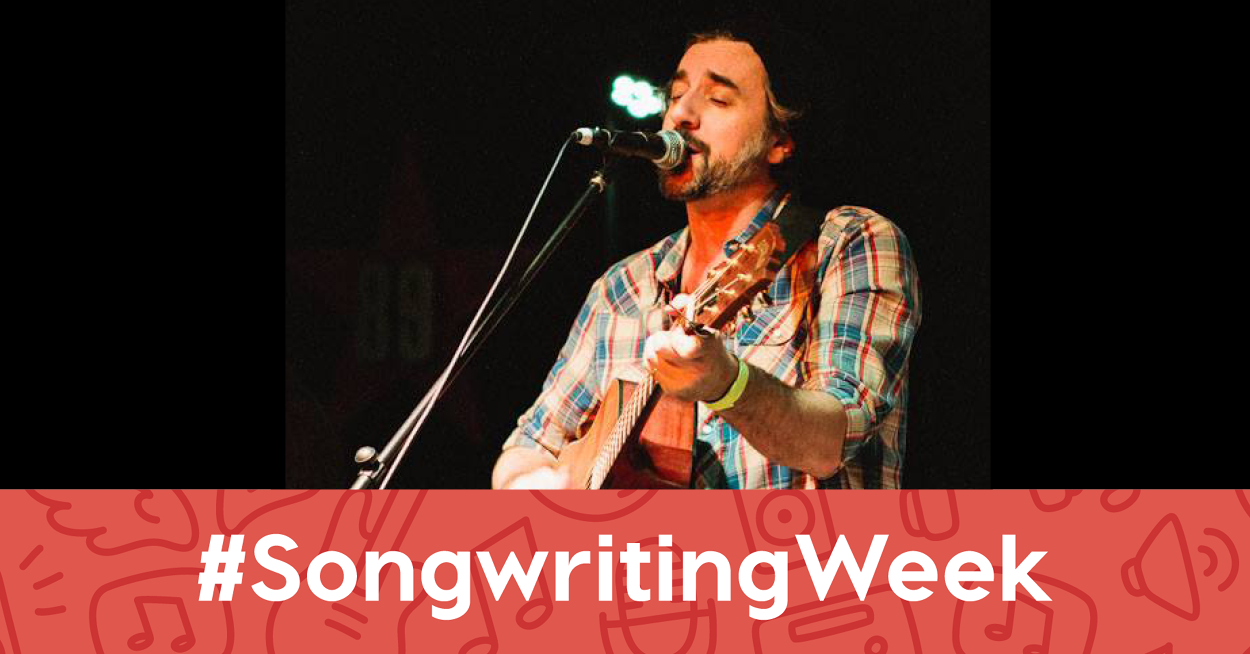
3 Reasons Songwriters Should NOT Quit Their Day Job

Marshall Ayers Career Advice, Music, Performing Arts, Songwriting

This article is being published jointly on Artzray and Soundfly  in celebration of #SongwritingWeek!

By Alan Semerdjian, featured photo by Kenny Janosick

There’s this idea out in the world that unless we’re working as songwriters and doing music full-time — music solely — we’ve somehow failed or compromised our integrity as artists. I’ve come to understand this notion as flawed thinking.

Read More

5 Things to Do Before You Shop Your Screenplay

Andrea Davis Beyond, Career Advice, Film, Getting Started, Getting Started, Screenwriting, Television, Tips, Writing

So you wanna write a screenplay.

We’re not going to tell you to rewrite it and make it the best story you can. We’re assuming you already know that and will do it.

These are practical points from story analysts who have read thousands of scripts . . . each.

Story analysts (casually called “readers”) are employed by studios and literary agencies to be the first people to read your script and then to provide a written analysis of it, which is called “coverage”. That means we get to read your script, summarize it and describe its strengths and weaknesses, usually in a page or two that is then submitted to agents, development executives and producers. They use coverage to decide if they want to spend their time reading your script. We are an exacting group with low tolerances for weak grammar, bad spelling and sloppy storytelling.

Read More